 ParkWise
Which signs indicate parking?
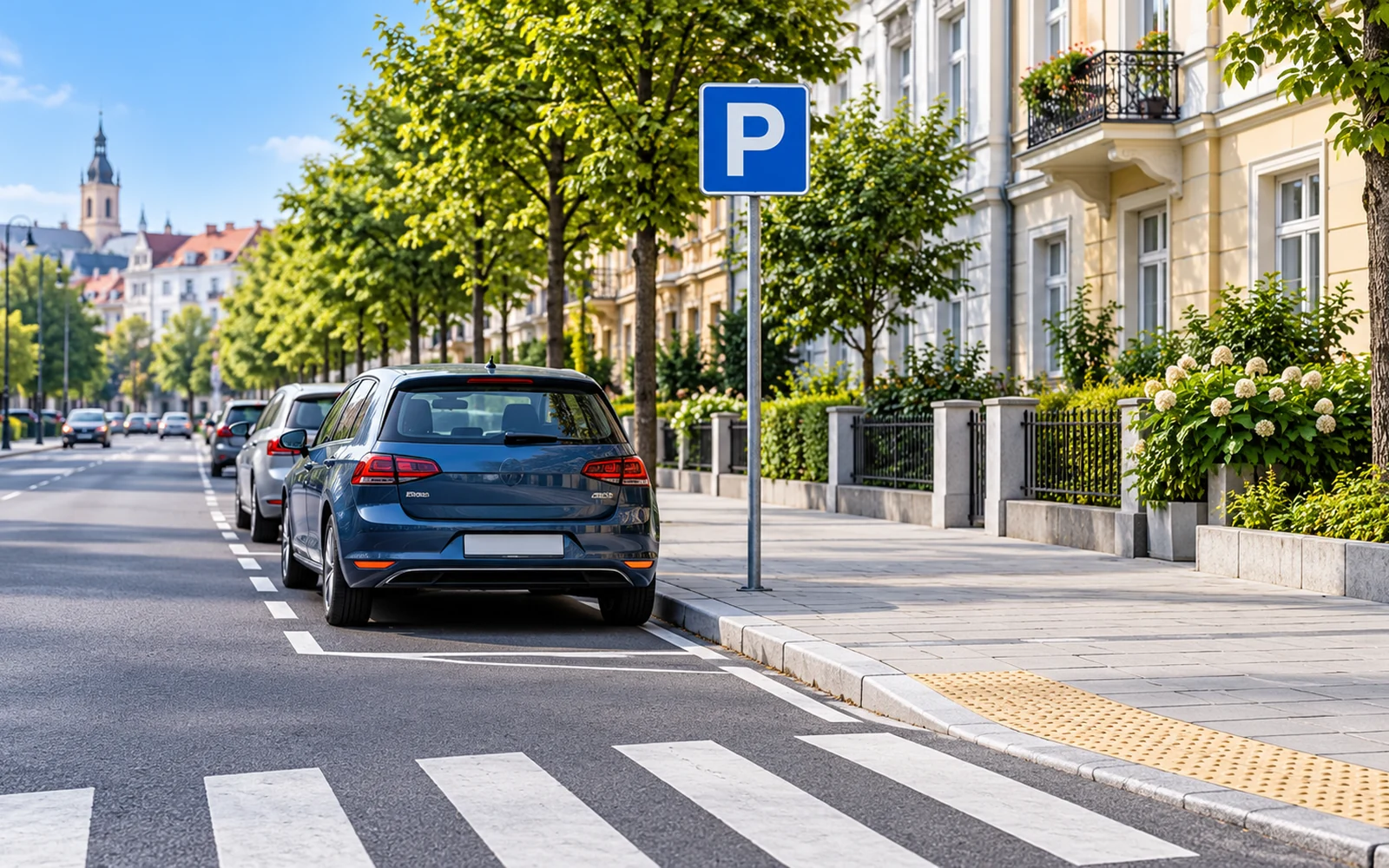
Look for a sign marking a parking place and read every supplementary plate. A plate is part of the sign: it can specify how to park, hours, a time limit or which vehicles may use the space.

D-18 “parking”
Marks a place intended for parking vehicles. A supplementary plate may show the parking arrangement, restrict vehicle types or reserve the space. The sign does not waive fees or other restrictions.


P-18 and P-19 markings
P-18 marks an individual parking bay; P-19 marks a parking lane. Park within the marked area and follow vertical signs.

B-35 and B-36
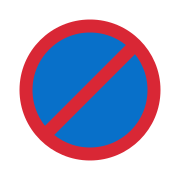
B-35 prohibits parking: leaving a vehicle for more than one minute is not allowed unless the sign or plate states an exception. B-36 prohibits stopping. Check which side and stretch of road the sign covers.
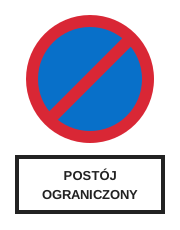
B-39 restricted-parking zone
Parking is restricted on roads within the signed zone; any permitted parking time may be shown on the sign. Regulations provide exceptions for D-18 spaces and paid-parking zones, among others, so read the complete signage.
See the Polish road-sign regulation (§ 28–29 and § 52).
Parking on a street: the basics
If you stop on the carriageway, position the vehicle as close to the edge as possible and parallel to it. Stopping and parking are allowed only where the vehicle is visible from a sufficient distance and does not create danger or obstruction. Follow the parking arrangement shown by signs.
Keep sightlines clear
Do not block a sign, signal, crossing or driveway. Do not obstruct traffic, access to property, pedestrians or cyclists.
Check the distances
As a rule, do not stop on a railway crossing or at an intersection, or within 10 m of them. Do not stop on a pedestrian or cycle crossing or within 10 m before it; on a two-way road with two lanes, the restriction also applies beyond the crossing. Restrictions also apply around bus stops, tunnels, bridges and viaducts.
Do not block others
Parking is prohibited if it obstructs entry or exit, access to another correctly parked vehicle, or the road. Do not leave a car on a cycle track or a traffic-exclusion area.
These rules are set out mainly in Articles 46 and 49 of Poland’s Road Traffic Act.
Can you park on a pavement?
Sometimes, but the fact that a car fits on the pavement is not enough. Polish law refers to a “pedestrian route”; a pavement is one part of it.
Conditions for a car
- There must be no stopping or parking ban on that section of road.
- A motor vehicle with a maximum authorised mass of up to 2.5 t may stand with one side or its front axle on the pedestrian route.
- The pavement must be at least 1.5 m wide, and parking must not obstruct pedestrians.
- If the front axle is on the pedestrian route, the car must not block traffic on the carriageway.
When these conditions are met, an entire passenger car, motorcycle, moped or cycle cart may be placed alongside the carriageway edge. Another vehicle with a maximum authorised mass of up to 2.5 t may be placed entirely on the pedestrian route only in a space designated by the appropriate signs. Always leave a clear path for people using wheelchairs, pushchairs or mobility aids.
Residential zone: park only in designated spaces
A residential zone begins at D-40 and ends at D-41. Vehicles may be parked only in places designated for that purpose. Do not assume that an open kerbside area, pavement or space between apartment blocks is a parking bay.
Pedestrians have special rights
Pedestrians may use the full width of the road and have priority over vehicles. The speed limit is 20 km/h.
A traffic zone is different
A traffic zone is marked by D-52 and D-53. It is not the same as a residential zone; D-52 alone does not impose the rule that parking is allowed only in designated spaces, though signs, traffic rules and site regulations still apply.
See Articles 2, 20 and 49 of the Road Traffic Act and Polish Police guidance on residential zones.
Paid-parking zones and private car parks
D-44 marks entry to a paid-parking zone and D-45 marks its end. Check local signs, charging hours, payment methods and the rules for the specific space.
Car parks at shops and shopping centres
On private car parks, read the terms at the entrance: parking may be for customers only, or require a ticket, vehicle registration or payment after a free period. Operator rules differ from municipal zones.
Accessible parking spaces
A marked accessible bay is reserved. The road marking alone does not grant everyone the right to use it — check the signs, plate and required authorisation. A parking card is not general permission to ignore restrictions.
Electric-vehicle charging bays
A charging bay may have additional signs and terms. Use it only if your vehicle is eligible, and do not block the charger after charging if the rules prohibit it.
Checklist before leaving your car
Five quick checks help prevent common parking problems.
- Do any sign or plate prohibit parking here or at this time?
- Is the vehicle within the marked bay and positioned as indicated?
- Am I blocking a crossing, intersection, sign or another driver’s view?
- Have I left pedestrians, including wheelchair and pushchair users, a clear path?
- In a paid zone or private car park, have I completed the required steps and paid?
If in doubt, choose a clearly marked bay or check the car park on the ParkWise map.
Parking rules: frequently asked questions
Does D-18 “parking” mean the space is free?
No. D-18 marks a place intended for parking. Fees, time limits and conditions may be set by supplementary signs, the operator’s terms or local rules.
Can I stop briefly where B-35 is displayed?
B-35 prohibits parking, meaning an unplanned stop lasting more than one minute. Other rules and signs may still prohibit a brief stop. B-36 prohibits stopping, except where the vehicle is immobilised by traffic conditions or traffic rules.
Can a passenger car be parked entirely on a pavement?
An entire passenger car may be placed alongside the carriageway edge on a pedestrian route if there is no ban, the pavement is at least 1.5 m wide and parking does not obstruct pedestrians. Article 47 sets out the other conditions.
Can I park outside marked spaces in a residential zone?
No. In a D-40 residential zone, parking is allowed only in places designated for that purpose.
Do the same rules apply on private car parks?
Traffic rules and signs remain relevant; you must also check the owner’s or operator’s terms, access conditions and fees.
Sources and further reading
This guide is based on the applicable legislation and informational materials from the Polish Police. The rules above refer mainly to Articles 46–50 of the Road Traffic Act and the road-sign regulation.
- Poland’s Road Traffic Act — consolidated text, Dz.U. 2024 item 1251
- Road-sign regulation — ELI text
- Polish Police: residential-zone rules
- Polish Police: parking rules and safety
This guide is for general information and does not replace checking signs at the location or advice on a specific case. Follow current signs and applicable law.
Find parking in ParkWise before you set off
Want to park with greater confidence and reduce the risk of a parking fine? Open ParkWise, check the parking options nearby and choose a spot. Always follow the signs, supplementary plates and local rules when you arrive; they determine whether parking is allowed.
Find parking in the ParkWise app